Mill Street Incubator Kitchen
Use & Rentals
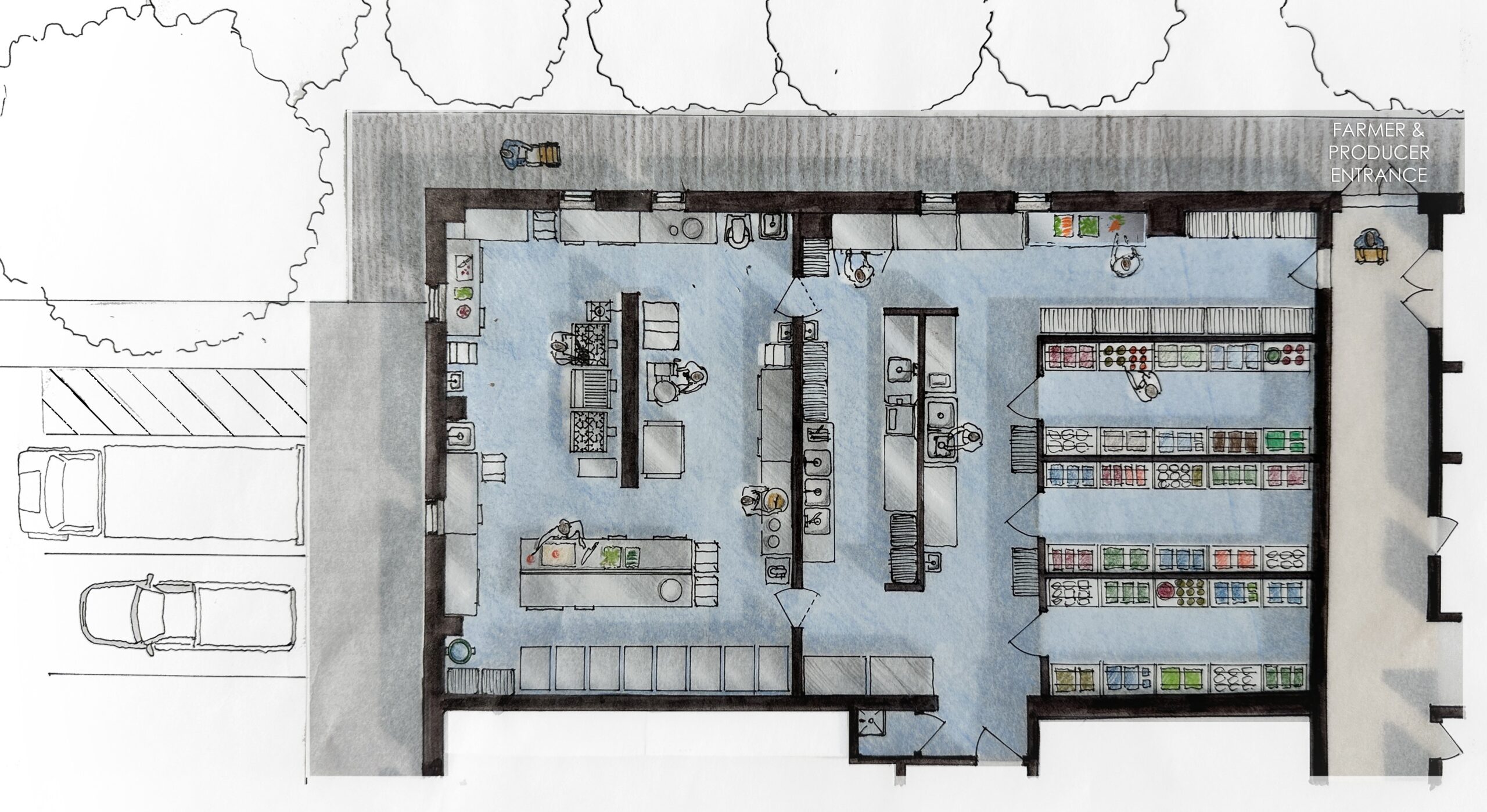
The Mill Street Incubator Kitchen, operated by the nonprofit Mill Street Opportunity Alliance, is a licensed commercial kitchen and business incubator that provides food entrepreneurs, community partners, and students with the space, equipment, and resources needed to launch and grow sustainable food businesses.
The kitchen includes licensed cooking space, shared equipment, storage, and aggregation space, allowing participants to prepare, organize, and stage products for retail, wholesale, or direct-to-consumer sales. This combination of facilities supports both educational programming and economic development, connecting production directly to market opportunities.
Who Can Use the Kitchen
We welcome a variety of users, including:
- Local food entrepreneurs
- Aspiring chefs, caterers, and bakers
- Farmers producing value‑added food products
- Cottage food producers preparing for scaling
- Food truck operators preparing menu items
- Community partners (e.g., Hastings High School Culinary Arts Program)
To ensure safety and compliance, all kitchen users must meet licensing, insurance, and food safety requirements as outlined below.
COMNIG SOON!
- How to Apply & Gain Access
- Scheduling & Use Policies
- Fees & Rental Rates
- Available Equipment
- Insurance Requirements
- Financial Assistance & Mini‑Grants
Connections to Incubator Programs
Using the kitchen is not limited to rental only — it connects you to our broader business ecosystem:
Entrepreneurial Education
Develop skills in licensing, marketing, costing, and product development.
Learn More
Featured Chef Program
Test your menu and gain customer feedback in Mill Street Market’s café.
Learn More
Market Access Opportunities
Explore retail sales through the Farm Stop and community events.
Learn More
Orientation & Training (Required for Kitchen Use)
To ensure a safe, compliant, and well-functioning shared kitchen, all producers will complete required orientation and training prior to using the space. This training supports producers at all experience levels, from a refresher to foundational knowledge.
Food Safety Training
-
Proper food storage
-
Cross-contamination prevention
-
Safe food handling techniques
Sanitation Orientation
-
Facility sanitation standards and objectives
-
Hands-on demonstrations of cleaning procedures
Equipment Safety Orientation
-
Proper function and operation of all shared equipment
-
Safety standards and best practices
These trainings create a culture of safety and professionalism, protecting both your products and the kitchen ecosystem.
To ensure a safe, compliant, and well-functioning shared kitchen, all producers will complete required orientation and training prior to using the space. This training supports producers at all experience levels, from a refresher to foundational knowledge.
Food Safety Training
-
Proper food storage
-
Cross-contamination prevention
-
Safe food handling techniques
Sanitation Orientation
-
Facility sanitation standards and objectives
-
Hands-on demonstrations of cleaning procedures
Equipment Safety Orientation
-
Proper function and operation of all shared equipment
-
Safety standards and best practices
These trainings create a culture of safety and professionalism, protecting both your products and the kitchen ecosystem.
All kitchen users are required to hold, at minimum, a current ServSafe Food Handler certification. Certification must be kept current at all times and a copy must be on file with Mill Street Market (MSM). The link below directs users to the ServSafe website, where the certification may be completed either online or in person.
Frequently Asked Questions
Do I have to be enrolled in Entrepreneurial Education to use the kitchen?
No, kitchen use and education are separate. However, participating in the Entrepreneurial Education program is strongly encouraged for new entrepreneurs.
Can students use the kitchen?
Yes, through partnerships like the Hastings High School Culinary Arts program and approved community classes.
Is insurance required?
Yes — all users must be covered. More to come.